Table Of Content
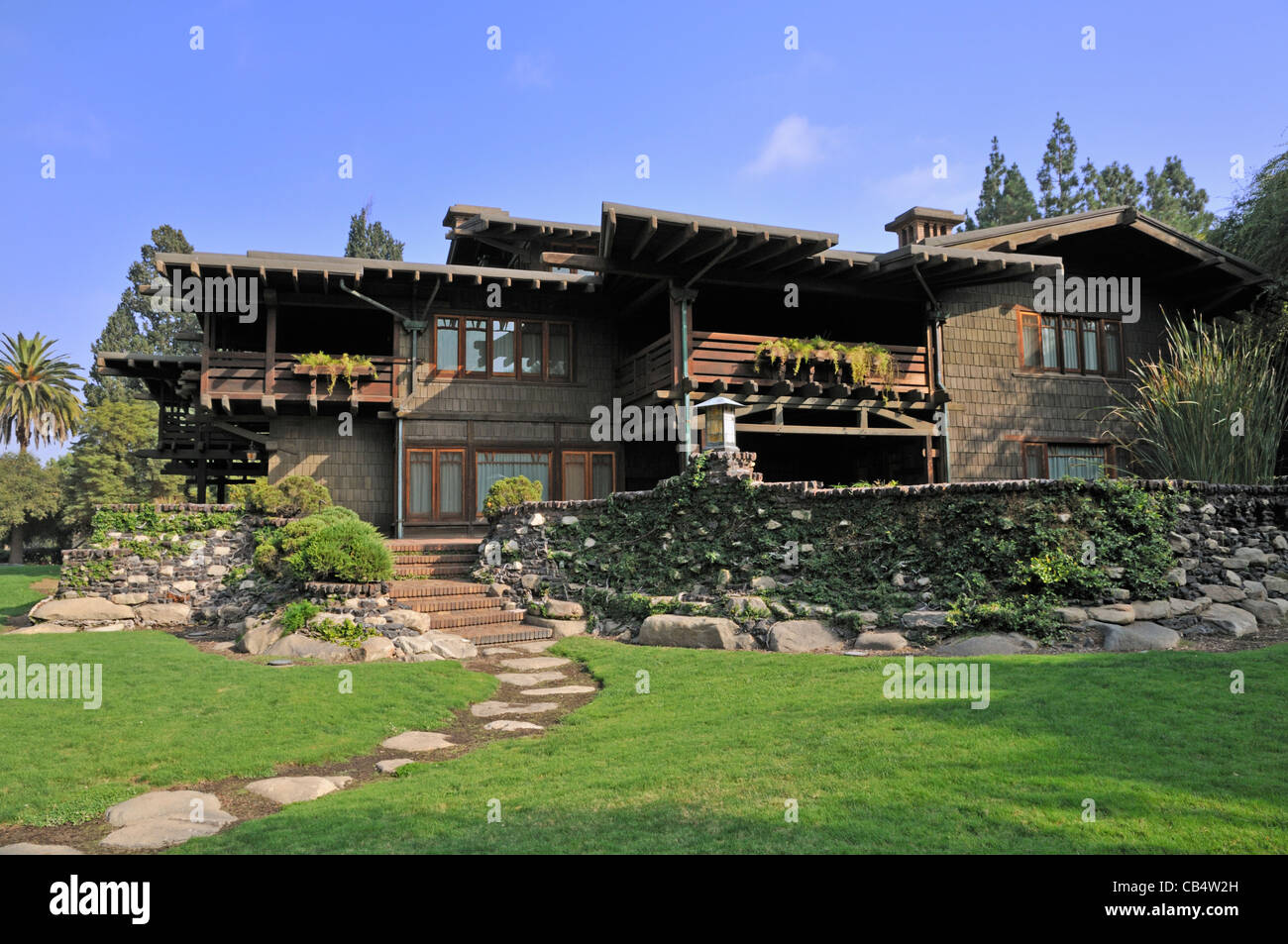
The Gamble House uses teak, oak, maple, mahogany, and cedar to incorporate contrasting colors, grains, and textures. Wood details include custom built-ins, inlays, and an exposed interlocking joint staircase. The brothers studied metal and woodworking at the Manual Training School of Washington University in St. Louis and graduated in 1888. In 1893, their parents moved to Pasadena, California, and asked their sons to relocate.

Interiors
The teak panels aren't screwed into the wall; the builders used a technique called a scarf joint, which wedged the panels together. Some of the panels, if not screwed into the walls, are actually hidden doors. One panel in the front hallway opens up, which allowed servants to enter and leave the downstairs kitchen.
The Gamble House: Style

The roofing materials were also replaced using replica materials crafted specifically for this important project. Charles Greene and Henry Greene were selected by the Gambles to build the Gamble House. The work of Greene and Greene was unparalleled, and the architects were well known in the area of Park Place for their exquisite attention to detail. Greene and Greene worked hand in hand with the Gambles to design their winter getaway. They broke ground in March 1908, and the construction of the home began. The Gamble House was commissioned in early 1908 by David and Mary Gamble to be used as a winter retreat.
Craftsman Masterpiece
The architects worked closely with the Gambles in the design of the house, incorporating specific design elements such as the family crest among its motifs. Drawings for the house were completed in February 1908, and ground was broken in March. Ten months later, the house was finished, the first pieces of custom furniture were delivered, and The Gamble House became home to David Gamble, his wife Mary, and their youngest son Clarence. (Their oldest son Cecil was already working for Procter & Gamble; their middle son Sidney had just started at Princeton University.) Mary’s younger sister, Julia, also came to live with the family.
Karla was then connected with the Executive Director, Ted Bosely, and other Gamble House staff, to start the conversation about the icebox. During her tour, she mentioned that the icebox in the cold room was too small for the house. Nancy asked if that if anyone came across a larger icebox to please contact the Gamble House and let them know.
About the Greene and Greene Architects
The historic 'Gwathmey House' built by James Gamble Rogers II for a citrus tycoon is for sale in Orlando area - Orlando Weekly
The historic 'Gwathmey House' built by James Gamble Rogers II for a citrus tycoon is for sale in Orlando area.
Posted: Fri, 09 Feb 2024 08:00:00 GMT [source]
The three-story house was finished ten months later and the family was able to move in. The Gamble House is architecturally significant as the best example of builders Greene and Greene's work in the Los Angeles area. The architecture represents one of the best examples of the Arts and Crafts style and California Bungalow style of architecture.
In the Gamble House, the two brothers could explore the full possibilities of this vision for clients who appreciated and could afford it. That their work was no longer in demand by 1915 is as much due to changing fashions (including the rise of interior decorators), as it was to the wartime economy and the high cost of materials and labor. Charles moved with his family to Carmel-by-the-Sea in 1916, where he continued some design work, though at a slower pace.
The Details
Similarly, the home’s Japanese metal lanterns, which differ from traditional designs, are adorned with art glass. The interior of the Gamble House is paneled lavishly in exotic hardwoods—Burmese teak in the entry hall and living room and Honduras mahogany in the dining room. Built-in cabinetry and myriad other features betray meticulous attention to detail, both functional and aesthetic, with due appreciation for and a deep understanding of materials and their appropriate uses. Studying together, the Greenes had three years of polytechnic instruction at the Manual Training School of Washington University in St. Louis prior to their formal architectural training at MIT from 1888 to 1891. H. Richardson in Boston before heading out to California to visit their parents in 1893. The drawings of the house were completed in February of 1908, the site ground-broken in March, and ten months later the house was completed and the first custom-built piece of furniture delivered.
The Gamble house incorporates Craftsman design in combination with deep Japanese influence. It is one of America’s most stunning house museums, and is a treasure to all who experience it’s beauty. Currently owned by the City of Pasadena and operated by the University of Southern California, the Gamble House is open to the public for tours. "An architect is a builder employing the process of art," Charles Greene once wrote. This is proven to be their governing belief, not only in the final product but also throughout the process. The brothers were known to veer from the initial blueprints, showing that they were enthralled with transition and process, the blueprints as a point of departure rather than a set of instructions.
The woods, the low and horizontal room shapes, and the natural light that filters through the art glass exterior windows coexist with a relatively traditional plan, in which most rooms are regularly shaped and organized around a central hall. Although the house is not as spatially adventurous as the contemporary works of Frank Lloyd Wright, or even of the earlier New England "Shingle style," its mood is casual and its symmetries tend to be localized. Craftsman architecture features many hard-carved wood millwork details, including trims, columns, and decorative elements.
It wasn’t until 1948 (over two decades since they closed their architecture firm) that they received recognition from the Pasadena Chapter of the American Institute of Architects. In 1952, they earned praise from the national AIA level for creating a “new and native architecture.” The two brothers died in the late 1950s. The Gamble House is one of the finest surviving examples Greene and Greene designs because it is so intact. Yet, at its core, the Gamble House is a “Western” home, explained Jennifer Trotoux, director of collections and interpretation at the Gamble House.
If his last name sounds familiar, it is because his family was connected to the Proctor and Gamble Company. The Gambles lived most of the year in Cincinnati, Ohio, and their love of the outdoors motivated them to commission and build this home in an attempt to get out of Ohio during the cold winter months. The Gambles had visited Pasadena many times prior to commissioning the home, and they often stayed in the luxury hotels that surrounded the area. They purchased the lot on Westmoreland Place in 1908, where the Gamble House would be constructed. This was not the most popular place in town to build during the period, and the Gambles chose it specifically instead of the much more posh neighborhood of South Orange Grove, which was referred to in town as Millionaires' Row.
Their father was a physician studying the effects of sunlight and fresh air on health, which would influence the indoor-outdoor connections of their designs. While traveling to California, the Greene brothers stopped at the World's Columbian Exposition in Chicago, where they saw an exhibit on Japanese architecture. This experience would also significantly impact the architects’ signature works. The Gamble House was the best known of the Greene Brothers’ “ultimate bungalows,” a Pasadena house type notable for its grand scale, meticulous craftsmanship and range of architectural influences. Stained Tiffany glass windows and carved wood rails remind visitors of Japanese screens and houses, with their simple but impressive interiors.
The living room was designed without any entry doors so that the room would be as open and inviting as possible. It also consisted of a spacious sitting room, which was decorated with five rugs that were designed by Charles Greene using watercolor. Across from the fireplace, there is a window that leads to the terrace, which overlooks the garden. The expansive window was designed to let light brighten the room during the late afternoon.
At night, the glow of the lanterns bounces off the surrounding lily ponds and quiet pools that adorn the landscaping creating a tranquil and serene environment. Driving around Pasadena, with its idyllic tree-lined streets and clusters of historic craftsman homes, it’s hard not to... Pasadena, with its deep roots in history, culture, architecture and science is home to several museums and educational... Gamble House tours (one-hour tours, specialty and group) are offered on Tuesdays, and Thursdays through Sundays.



No comments:
Post a Comment